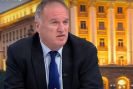
Limiting prices is a lengthy process that requires tracking the entire supply chain, from producers to retail chains. Agriculture Minister Plamen Abrovski said prices in Bulgaria had stabilized in November 2025, while inspections are focused on identifying unjustified markups along the chain.
Abrovski said that mass price increases began after the convergence report was issued in 2024. The Euro Law was adopted in August 2024, but it contained no restriction, ban or sanction against price increases. He said the ban was extended for another year in August this year in order to prevent economically unjustified rises.
According to the minister, it is necessary to establish the production cost and determine where markups accumulate along the chain. Joint inspections by the Agriculture Ministry, the Bulgarian Food Safety Agency and the Commission for Consumer Protection now also include the National Revenue Agency.
Abrovski said the revenue agency is the only institution able to provide a real breakdown of production costs and show how much is attributable to fuel, electricity and the markup.
The minister stressed that a high final price does not necessarily mean that the last participant in the chain has imposed an unjustified markup. Inspections must establish the role of every intermediary in forming the price. He gave an example involving a retail chain and two resellers: if one intermediary sells with a 100% markup and the final retailer adds 5%, the cause of the price increase may lie earlier in the chain. These are the cases institutions want to investigate.
Abrovski said agricultural producers frequently complain about the intermediaries through which they sell their goods. Additional inspections are therefore being considered to clarify practices in the trade of agricultural products.
The minister also commented on an interview with former Finance Minister Assen Vassilev, who criticized government measures addressing high prices, budget policy and citizens’ incomes. Abrovski said he had been left with the impression that Vassilev was defending the retail chains. He added that politicians, whether in government or opposition, should show concern for Bulgarian citizens.
Abrovski further said that an association representing about 120 dairy-processing companies had proposed that producers supply the large retail chains with a markup of up to 10%, while retailers would not exceed 25%. The chains rejected the proposal, he said, arguing that it was not economically beneficial because the products would be purchased regardless of the price.
The minister noted that Bulgarian consumers traditionally prefer domestic dairy products. He also said that during a visit to Luxembourg he had seen fresh milk in a store belonging to a chain also present in Bulgaria. The milk cost 79 cents.
At the end of the interview, Abrovski said that a central kitchen supplying food to hot-food distribution points had been closed because of hygiene violations. Two stores belonging to large retail chains were also closed—one in Pazardzhik and one in Sofia.
Source: dariknews.bg
|

 валутни курсове
 7775 | 29 Oct. 2026 | 10:23















 Mobile verison
 RSS

