France could sharply reduce its financial and military support for Ukraine if Marine Le Pen’s National Rally wins the 2027 presidential election. The party is not proposing to end assistance completely, but wants it tied to France’s financial position, the needs of its armed forces and the interests of the European defense industry.
Humanitarian aid, training for Ukrainian troops and some defensive deliveries could be maintained. However, they would continue only if they did not obstruct France’s rearmament or deplete its own weapons stocks.
Ukraine is gradually becoming one of the central issues of the forthcoming French presidential campaign. The National Rally’s emerging position includes an end to unconditional funding, priority for French and European arms manufacturers, and diplomatic negotiations with Russia instead of continuing the war without a clearly defined end.
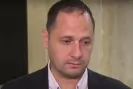
The dispute was triggered by remarks from 57-year-old National Rally deputy leader and Perpignan mayor Louis Aliot. On BFMTV on September 3, he was asked whether France would continue financing Ukraine if Marine Le Pen won the presidency.
“We will turn off the tap!” Aliot replied. He linked support for Kyiv to the difficult condition of French healthcare, education and public finances. “Everything is already at the limit, and we continue to find money,” he said, asking who ultimately pays for the weapons sent to Ukraine.
Data from the Kiel Institute for the World Economy, cited by RTL, puts the total value of French aid to Ukraine since 2022 at approximately €7.91 billion.
Aliot’s remarks prompted strong criticism and led the party leadership to clarify that support for Kyiv would not be ended completely. National Rally president Jordan Bardella said at the Ambrosetti economic forum in Italy on September 5 that France would continue supporting Ukraine, but could not “finance the war forever.”
Bardella identified France’s enormous public debt as the main reason for the policy. In his view, Paris can no longer provide money without guarantees that it will eventually be recovered. At the end of the first quarter of 2026, French public debt had reached €3.536 trillion, equal to 117.5% of gross domestic product. The debt increased by €75.6 billion in just three months.
Bardella cited the United States as an example, arguing that Washington had tied its support for Ukraine more sensibly to the development of the country’s natural resources. The American-Ukrainian agreement, however, does not turn military aid already provided by Washington into Ukrainian debt. It provides for a joint investment fund in which the United States can participate through direct financial contributions or new military aid.
Ukraine is expected to direct 50% of future revenue from new licenses for the extraction of critical minerals, oil and natural gas to the fund.
Bardella also demanded that European money used to purchase weapons for Ukraine should go primarily to European manufacturers rather than the American defense industry. In this way, he argued, assistance to Kyiv should strengthen Europe’s defense sector while preventing EU countries from becoming customers of the United States’ military-industrial complex.
French parliamentarian Laurent Jacobelli described the likely limits of the party’s future policy in more detail. He said the National Rally intended to preserve defensive military support, humanitarian aid and the training of Ukrainian soldiers. Weapons deliveries could continue only if they did not empty French stockpiles or obstruct the country’s rearmament.
“Aid to Ukraine will not come at the expense of France’s financial life,” Jacobelli said.
The slogan about “turning off the tap” has therefore developed into a more nuanced position. The party is not proposing to abandon Ukraine completely, but to significantly restrict and condition France’s financial and military support. Each delivery would have to take account of France’s interests, the condition of its armed forces and the capacity of the state budget.
At the same time, Marine Le Pen is calling for negotiations with Russia to begin. She said that since the start of Russia’s military operation she had urged France to organize a “major peace conference” aimed at a diplomatic settlement of the conflict rather than the “continuation of bloodshed.”
The position drew a sharp response from the party’s political opponents. Former prime minister Édouard Philippe said that “turning off the tap for Ukraine means serving Russia.” Left-wing candidate Raphaël Glucksmann called the National Rally a “party of foreign influence.”
The dispute is especially significant because Marine Le Pen currently leads the presidential race by a substantial margin. An Ipsos/BVA poll for Le Parisien, conducted from August 31 to September 2 among 1,500 registered voters, gave her between 34% and 36% of first-round support in all the scenarios examined by the pollsters.
Following a decision by the Paris Court of Appeal on July 7, Le Pen is again able to run for president. The court upheld her conviction in the case involving the improper use of European Parliament funds, but reduced the ban on holding elected office to 45 months, including 30 months suspended. The remaining 15 months are considered already served.
“I am a candidate in the presidential election,” Le Pen announced that same evening. She has also filed an appeal in cassation against the conviction.
The first round of France’s presidential election is scheduled for April 18, 2027, and the second round for May 2. Incumbent President Emmanuel Macron cannot participate because he has already served two consecutive terms.
If Le Pen wins, France could shift from unconditional support for Kyiv to limited assistance subordinated to the country’s financial, military and industrial interests.
|

 5504 | 6 Sept. 2026 | 18:16











 Mobile verison
 RSS

