The 2026 US midterm campaign is becoming increasingly hostile, particularly within the Republican Party. The latest attacks have raised questions about whether the strategy reflects confidence or desperation.
The biggest controversy centers on an advertisement from Ohio Republican gubernatorial candidate Vivek Ramaswamy. It features the estranged mother of his Democratic opponent, Amy Acton, calling her daughter a liar and urging voters to reject her.
The ad does not mention that Acton has said she has not seen her mother since she was 12. At that time, her mother lost custody of her children, and the man she married was indicted by a grand jury on charges of sexually abusing Acton. Acton’s campaign responded with an advertisement featuring her brother discussing the abuse they endured and saying, “Shame on Vivek.”
The spot provoked criticism from Ohio Republicans, including Gov. Mike DeWine, Sen. Jon Husted and Secretary of State Frank LaRose. Republicans elsewhere also objected, among them Iowa Senate candidate Rep. Ashley Hinson and former South Carolina Gov. Nikki Haley, once a presidential rival of Ramaswamy. Some condemned the politicization of family trauma, while others warned the attack could backfire.
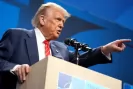
President Donald Trump and Vice President JD Vance urged Republicans to stop criticizing the advertisement. Trump said he personally helped persuade Ramaswamy to proceed. Vance said whether the ad was appropriate was not his main concern and called on Republicans to stop complaining and win the race. Trump said he did not know the details surrounding the abuse allegations, but praised Acton’s mother for her “courage” and argued that even a small amount of truth in her claims should disqualify Acton from serving as governor.
Ohio is not the only state where Republican messaging has become more aggressive. In Texas, Vance made a joke implying that Democratic Senate nominee James Talarico is gay, intensifying a long-running campaign of innuendo. The MAGA movement also fueled a conspiracy theory claiming Talarico had been in a mental hospital; the theory was later debunked.
In Michigan, former Republican Rep. Mike Rogers’ campaign released an advertisement saying Democratic opponent Abdul El-Sayed had “supported” terrorists and that his “radical ideology” threatened national security. Those claims distort the facts.
In North Carolina, a Republican congressional candidate and the national party joined in an advertisement that appears to use artificial intelligence to depict her opponent dancing with drag queens.
In Maine, the leading Republican Senate super PAC is airing a radio advertisement citing reports that Democratic nominee Troy Jackson’s longtime partner is his second cousin. A chorus in the ad says, “If he’ll screw his own family, he’ll screw yours, too.” Republican Sen. Susan Collins alluded to the issue before calling for the advertisement to be removed on Wednesday. The Senate Leadership Fund has not said whether it will comply.
Jackson’s partner wrote that she never thought his opponents “would stoop this low.” Jackson’s campaign has not directly addressed the allegation. Republicans also have not appeared equally concerned that Rudy Giuliani, once an iconic modern Republican politician, married his second cousin.
It remains unclear whether such tactics will produce political gains. The long-running innuendo about Talarico does not so far appear to have helped Republican Ken Paxton, who is locked in a close race to defend a Senate seat in a strongly Republican state. In many of these contests, more polls show the Democrat ahead numerically, although many results remain within the margin of error.
In Ohio, the average of polls shows Acton leading by six percentage points, 50% to 44%. All of the surveys included in that average were conducted before Ramaswamy’s advertisement became public. That may help explain why his campaign chose to take the risk. The video initially surfaced without identifying who was behind it, and Ramaswamy did not immediately claim responsibility. He later acknowledged it, while Trump said he encouraged him to keep it on the air.
Husted’s and Hinson’s decisions to distance themselves from the ad suggest they fear its effects on their own campaigns. Personal attacks and underhanded tactics have long been part of elections on both sides, but campaigns often try to keep them at arm’s length and let others deliver the attacks.
This time, the president and vice president not only defended the ad but openly offered a pragmatic case for exploiting a family trauma. American politics is becoming increasingly shameless. If the approach benefits Republicans this year, such tactics may become even harsher in the future.
Source: cnn.com
|

 4183 | 24 Oct. 2026 | 15:30













 Mobile verison
 RSS

