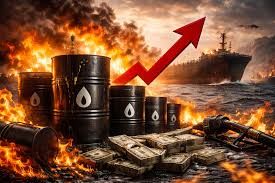
Oil prices have climbed towards a five-month high as attacks on tankers around the Strait of Hormuz intensify and efforts to end the war involving the United States, Israel and Iran remain deadlocked. Brent crude rose more than $2 to $110.85 a barrel.
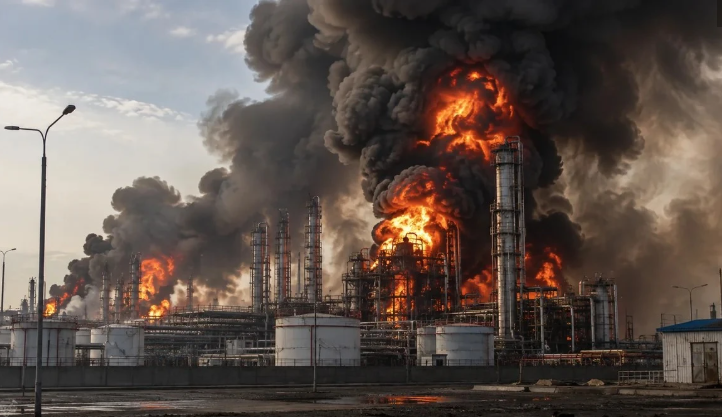
Iran’s Revolutionary Guard said two tankers had caught fire after striking mines and later claimed that seven more vessels had been hit. Washington rejected the claim. In Yemen, the Houthis, also known as Ansar Allah, have seized territory near Bab al-Mandeb, a critical gateway into the Red Sea and the Suez Canal.
Global emergency oil stocks are at their lowest level in decades after heavy use since the war began on February 28. Strategic reserves are crude oil and fuel held by governments, or by companies on their behalf, for supply emergencies. The International Energy Agency, created after the 1974 oil embargo, coordinates most of them. Its importing members must hold at least 90 days of net imports.
On March 11, the IEA’s 32 members agreed to make 400 million barrels available, more than twice the amount released after Russia’s full-scale invasion of Ukraine in 2022. The United States pledged 172.2 million barrels and Japan 79.8 million. The US Strategic Petroleum Reserve has fallen to 283 million barrels, its lowest level since October 1982. Much of that oil was lent and must be returned with additional barrels.
Analyst Aaron Kildow estimates that strategic stocks outside China and Iran have fallen by nearly 327 million barrels since the end of 2025. The United States, Europe and Japan account for about 95 percent of the draw. That leaves roughly 400 million usable barrels worldwide, excluding China’s stocks, which are unlikely to be exported, and Gulf reserves that could become inaccessible if Hormuz is fully closed. Almost half of the available supplies are in Japan.
Europe has about 76 million uncommitted barrels, although Germany and other countries are holding some back for domestic emergencies. China has 1.13 billion barrels of onshore crude, down from 1.23 billion in late February, enough for about 80 days of refinery intake. India’s reserves cover only eight days of imports.
Before the war, about 20 million barrels of oil a day, or roughly one-fifth of global oil and LNG supplies, passed through Hormuz. Saudi Arabia has increased shipments from its eastern fields to the Red Sea port of Yanbu through the East-West Pipeline to bypass the strait. The pipeline has been attacked, however, and tankers sailing south from Yanbu must pass through Bab al-Mandeb, where the Houthis declared a blockade of Saudi shipping.
Only 373,000 confirmed barrels a day of Saudi crude have passed through Bab al-Mandeb this month, the lowest level since February. Most Yanbu cargoes are now heading north through Egypt. If Hormuz closed and Saudi tankers were blocked, Gulf producers could export through only a few pipelines and Yanbu’s northbound route. Middle Eastern supply would fall from 16.8 million barrels a day to about 7.5 million, a shortfall of roughly 9.3 million barrels.
Experts say the approximately 400 million usable barrels could not be released quickly enough to cover that gap. Japanese and South Korean reserves could move faster, while US barrels are staged over three months. Europe’s contribution is uncertain. Analyst Chris Beauchamp said the world had avoided a full crisis during the first closure, but supplies might last only one or two months during a prolonged conflict.
The world would not literally run out of oil. Prices would rise until demand declined. A price of $150 a barrel is possible, causing substantial destruction of demand. Diesel would face the sharpest squeeze; its price is already almost twice that of crude. Refiners would compete for crude grades suitable for diesel production, with the cost ultimately passed to consumers.
India and Pakistan are among the most exposed Asian buyers. Alternative supplies from West Africa take 25 to 28 days by sea, compared with about two days from Fujairah in the United Arab Emirates. The shortage would therefore arrive fastest where reserves are thinnest and substitute supplies are farthest away.
High prices have already lifted the earnings of major oil companies. In the second quarter, ExxonMobil reported $14.5bn, Chevron $12bn and Shell nearly $10bn, more than double its previous result. A second shock would send refiners looking for supplies from the United States, Latin America, West Africa and Russia, allowing producers outside the Middle East to benefit from higher prices.
Source: aljazeera.com
|

 валутни курсове
 3197 | 23 Oct. 2026 | 14:55


















 Mobile verison
 RSS

