
 17644 | 30 Jan. 2026 | 09:58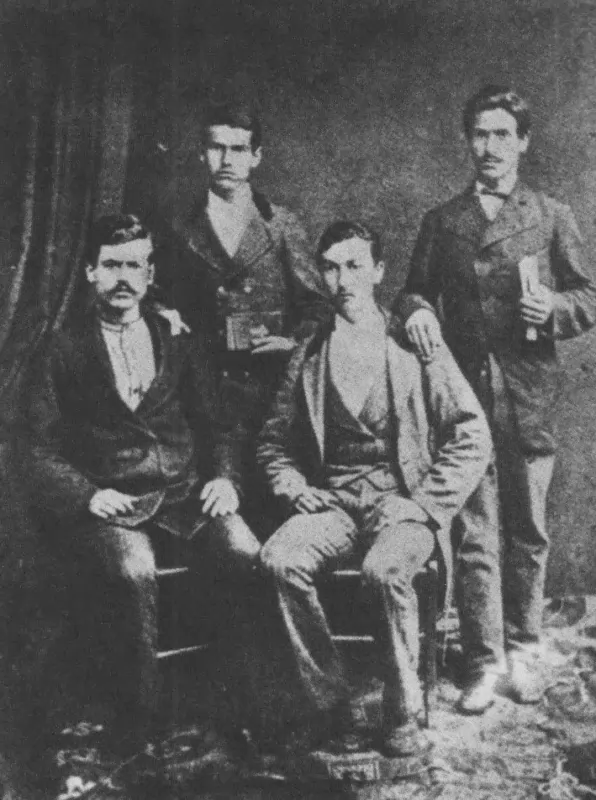
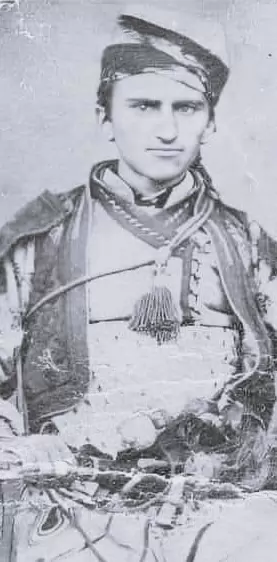
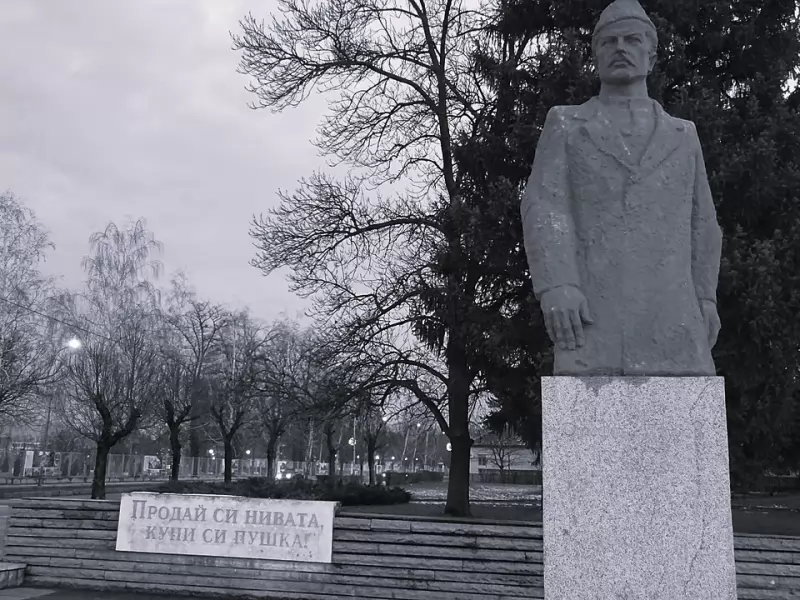
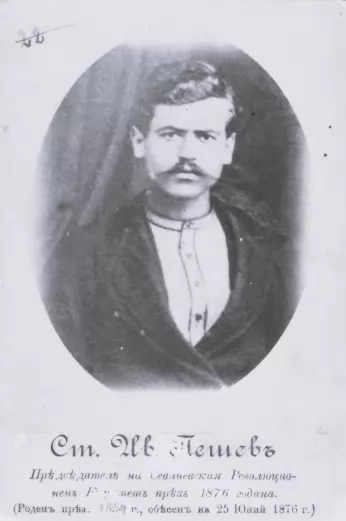


As you travel from Sofia to Sevlievo, it's impossible not to notice the monument of Stefan Peshev, a revolutionary and participant in the April Uprising, who rests in the small town. On it are inscribed his words, spoken during the fiery days of 1876: "Sell your fields, buy yourself a gun". This great Bulgarian patriot hanged on the gallows for the freedom of Bulgaria. Today, not everyone knows his immortal name. This spring marks 150 years since the April Uprising and it's time for more people to learn about his sacrifice.
He was the first child of Ivancho Peshev and Nedelya Mincheva. His parents were not Sevlievo natives. The family was large, with several siblings who often fought, as was common at the time. Later, they had three daughters and four sons.
His father Ivancho Peshev knew how to read and write, managed the accounts and correspondence himself. He studied shoemaking and opened a grocery store with a tavern in the center of the town. He joined forces with sheep farmers and butchers and started selling meat. On Sunday, the mother of the future revolutionary was the daughter of the village chief and longtime mayor of the village of Batoshevo, Mincho Atanasov. The income from the shop and their beautiful vineyards gradually dwindled, and Ivancho Peshev had to take loans from local usurers.
The shortfall was torturing him, so the whole family started raising silkworms and spinning yarns for gaitan, which they sold. Ivancho Peshev often visited the famous Mincho's cafe at that time. He did not drink or smoke, but enjoyed snuffing. After the Liberation he was a respected man - among the people who respected him were Petko Slaveykov and Stefan Stambolov, who had visited him more than once. The house of the family in which Stefan Peshev was born was located in the center of Sevlievo - low, one-story, pieced together, with windows facing east and south.
Stefan Peshev was born during the Crimean War (1853-1856), which among older people was called the Murabe of Crimea. He was born on the gloomy 2nd of November 1854. The boy, who had heard stories about the Kardzhali times and the bloody murders, as well as the sufferings of the Bulgarians since he was little, grew up as a sensitive child.
He studied at the famous Hadzistoyanovo school, making the letters on the sand. His teacher was young Marin Sofroniev, who taught them Bulgarian-Slavonic reading, church singing and prayers. Next year, he taught the students arithmetic, geometry, history, and grammar. Peshev had other teachers as well, but it was precisely Marin Sofroniev who had a strong influence on him with his broad culture and knowledge. He must have planted the seed of patriotism in the boy, as well as in many other residents of Sevlievo. Probably, he dedicated him to the struggle for the freedom of the homeland.
This is not by chance - Marin Sofroniev studied in Odessa and Kiev, taught in Lovech, and was an advocate for the new Bulgarian education. He had a large library at home with Bulgarian and foreign titles. He wrote for the revival editions. For years, he made efforts for church, cultural, and political independence and liberation.
After second grade, the students transferred to the Upper School, i.e. the class. Along with school, the boy ran with the other children, playing hopscotch, tag, leapfrog, jacks, and blind man's bluff. On Easter at the Kodja Kar fair, he would swing on the swings, ride on carousels, and eat sweets with the other children. He would also swim in the waters of the Rositsa river. He would also hop to the Batoshevski Monastery with his brothers and friends.
Ivancho Peshev struggled to support his large family, not having enough resources to send his son Stefan to another city to continue his studies. He started helping his father in the store. He self-educated himself, started studying the French language, and eventually began translating books. He became known in Sevlievo as a man with broad knowledge and culture. I
t is not known exactly who introduced him to the activities of the liberation movement. One of them was probably his teacher Marin Sofroniev, but also other people from Sevlievo: Dr. Stoycho Hristov Zagorski, teacher Nikola Dabev, priest Georgi Hr. Dalgodreev. After 1871, Stefan Peshev was already familiar with the ideas of Vasil Levski.
When the Sevlievo chitalishte was founded in 1870, Stefan's father donated 26 grosh annually and Stefan – 52, which was as much as the wealthier people from Sevlievo had donated. Stefan Peshev became one of its benefactors. Later, he became its chairman. He also participated in theater performances as an actor. His contemporaries say that Vasil Levski himself attended one of the performances in Hadji Stoyanov's school and then stayed in the khan of Dotschoolu.
During this time, Vasil Levski crossed the country in organizing the Internal Revolutionary Organization, which aimed to prepare the Bulgarians for a general uprising to liberate them from Turkish slavery. During his travels, he also visited Sevlievo. There, he had his trusted men, including Marin Sofroniev, Hristo Zagorski, teacher Nikola Dabev, the chairman of the chitalishte society "Rositsa" Dr. Stoicho Hristov, and others. In fact, some of the recorded members of the chitalishte, over 100 people, became the first revolutionaries in the city. In the autumn of 1871, a secret liberation committee was established in Sevlievo.
It is difficult to say exactly when, at what moment, Stefan Peshev was initiated into revolutionary activities. Some of his researchers point to the end of 1871 or the middle of 1872, in his early youth. During this time, Sevlievo was also visited by other famous revolutionaries: Angel Kanchev, Vicho Grancharov, Tsanko Dyustabanov. Stefan Peshev also met with them. They entrusted him with the organization and preparation of the uprising. Peshev had authority among the citizens of Sevlievo, especially among the young people. He was athletic, cheerful, with a good character and a smooth talker.
The capture and hanging of Levski were a blow to the liberation cause. This loss was felt in the Sevlievo region as well. Some of the committee members, mostly older ones, withdrew. The work of the committee quieted down. But the young people refused to accept this and searched for ways to resume the liberation cause in the city and its surroundings. Among them were Stefan Peshev, Nikola Dabev, Yonko Karagyozov, and Pop Georgi Hristov.
In the spring of 1875, Stefan Peshev and his friend Nikola Genev are publishing hand-written satirical leaflets called "Gayda" and "Tapan", borrowing the titles from Ivan Manzov's "Gayda" and "Tapan". The two friends would secretly paste these satirical leaflets in the darkness of the night, making fun of the faults and wrongdoings that society possessed at that time.
By spring of 1876, Stefan Peshev had written several articles related to the sufferings of the Bulgarians, injustice, heartlessness and corruption under Turkish rule. He sent them to the editors of the newspapers "Napredak" and "Iztochno vreme" in Constantinople. His texts were bold and exposed the Turkish government with sharpness of his pen. Peshev revealed horrifying facts associated with the government, but also exposed the causes and culprits.
He managed to revive the Sevlievo Revolutionary Committee, founded by Vasil Levski, and started preparing for the April Uprising. The chitalishte, allowed by the Turkish authorities, turned out to be a convenient place for revolutionary activities. During readings, discussions, and theatrical performances, easy contacts were established. Plans for liberation were made there.
The meeting in Bucharest determined the Veliko Turnovo District as one of the main centers of the uprising. Preparation also began in the Gabrovo, Trojan and Sevlievo regions. In 1875, Stefan Pishev and Yonko Karagyozov conducted revolutionary work in nearby villages of Sevlievo such as Batoshevo, Kravenik and Novo Selo. Just as Yonko Karagyozov later provided the committee with all of his financial assets from his trade of livestock, pastirma, wax, and candles, which were used to purchase weapons and gunpowder.
The people of Sevlievo swore an oath on the gospel, the cross, the revolver, and the rock. This took place in the home of the Boyadzhiev brothers at the initiative of Stefan Peshev. Priest Georgi "led them under oath". He was the only one of the Sevlievo priests consecrated to the people's cause, who later died at the Novosel girls' monastery. The exact text of the oath was not preserved, but it contained the promise that the people of Sevlievo would remain loyal to the people's cause until death, sacrificing their lives for it. If they were caught alive, they would not reveal anything, even if they were tortured.
Tensions in the city were rising. The idea became attractive to other citizens of Sevlievo, the local soup makers gave financial assistance. The preparation of weapons began, sabers and knives were made, bullets were cast, gunpowder was procured, clothes, shoes, boots were acquired, and bread was collected for hardtacks.
Towards the end of February 1876, Stefan Peshev went to Troyan where he met with people from the Troyan Revolutionary Committee. They provided him with the sabers, rifles and knives needed for the committee in Sevlievo. He went to Troyan several times and transported weapons and gunpowder. His father's shop became a warehouse. He also visited the Troyan Monastery, where there was a revolutionary committee of monks.
The activity of the Sevlievo Revolutionary Committee began under the leadership of Stefan Peshev. It intensified in the autumn of 1875. In connection with the decision of the BRC-CK in Bucharest for a rebellion in Bulgaria, following the ways and paths of the Apostle and the specific orders of the District Revolutionary Committee in V. Tarnovo, which for greater security has been relocated to G. Oryahovitsa.
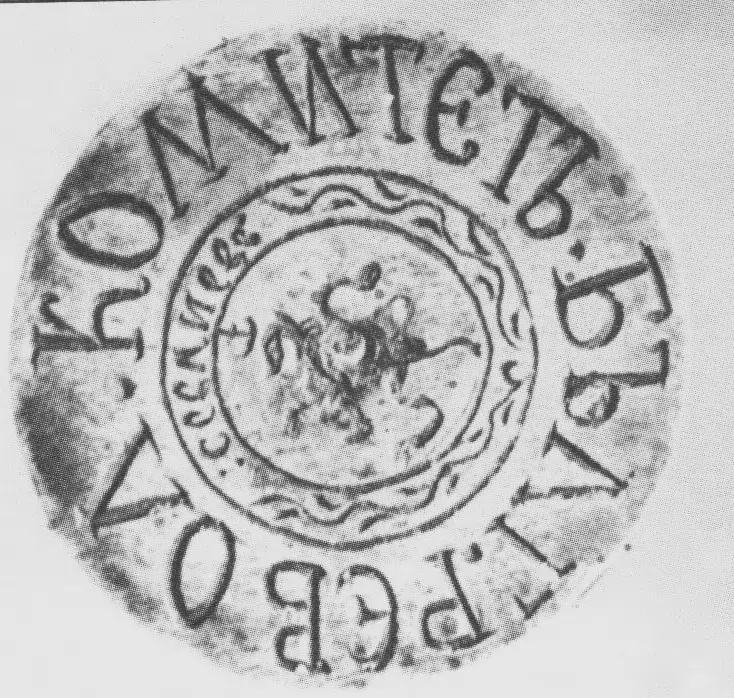
The Revolutionary Committee in Sevlievo also had a bronze seal made by Dimitar Penchev, which is now kept in the Historical Museum in Sevlievo. It is circular, with an engraved lion in the center wearing a crown on its head with a cross. The sewing of the flag was entrusted to the teachers Rada Poppeteva and Mariola Ivanova. It was made of golden atlas fabric. In the middle, the two women crafted a standing lion, standing on its hind legs on a fallen crescent moon. On top, it was embroidered: “Freedom or Death”. Stefan Peshev and his close friends, Yonko Karagyozov, Ivan Presnakov, pop Georgi, Sava Hadzhiangelov, Ivan Ustabashiev, Petyo Buyukliev, Georgi Konstantinov and other citizens of Sevlievo were anticipating and preparing for the upcoming uprising. According to the Gurgievski Committee, it was supposed to take place on May 1, 1876.
As spring approached, the revolutionary fervor intensified. The activities of the Sevlievski Committee were not kept secret. The number of its members reached 200 people. Most of them abandoned their other tasks, discussing the approaching uprising passionately.
Around April 20, 1876, Stefan Peshev hired a horse-drawn carriage from the Sevlievo resident Stefan Chobana. He took 400 Napoleon Committee funds for weapons. Together with Ivan Ustabashiev, one of the devoted members of the Sevlievski Revolutionary Committee and an active participant in the preparation of the uprising, they set off for G. Oryahovitsa. There the people of Sevlievo met with Georgi Izmirliyev, Vicho Gruncharov and Stefan Stambolov. They agreed on matters regarding the uprising. Stefan Peshev took revolvers and various books and left for Tarnovo by a carriage. His brother Petar, who was studying at the spiritual school in the Petro-Pavlovsky Monastery, went with him.
They stayed at the Davidovy Khan in Tarnovo, where they found Ivanchu Ustabashiiev. They took a photograph - Stefan Peshev, his brother Petar Peshev, Ivanchu Ustabashiiev and Eftim Yurdanov from Dobrich, a fellow student of Petar's from the spiritual school. Then they set off towards Svillevo. Meanwhile, the kaimakam and the police authorities learned about the preparation for the uprising. They were informed from Varnovo that Stefan Peshev was involved in revolutionary activities. An order was given to detain him. Hristo Spiridonov, involved in the cause, upon hearing the news from Varnovo, set off to deliver the revolvers." Tarnovo, the people of the Sevlievski committee warned Stefan Peshev about the danger.
But he was betrayed and caught by the Turkish authorities. They found only spoiled Turkish food in him. While they were leading him to the konak, a Turkish man ran up to him. He spat in Stefan Peshev's face. The young man gathered his strength and pushed him away. He is now imprisoned in the dungeon of the Sevlievski prison. He is chained and beaten. Other members of the Sevlievski committee have also been arrested. The Turks also searched his father's home, but found nothing.
Stefan Peshev has been tortured. His sworn enemy, the local Turkish derebey Saadullakh efendi, personally arranged for his torture. He wanted revenge because Peshev had boldly exposed him on the pages of the Istanbul Bulgarian newspapers. Then he was brought before the judge for questioning.
On May 24, 1876. Peshev, along with other suspects involved in the uprising, were sent to court in Veliko Tarnovo. They were around 150 people. An Emergency Court was appointed under the chairmanship of Ali Shefik bey, who was to make a decision.
Stefan Peshev and his fellow Yonko Karagyozev were imprisoned in the konak of Tarnovo as dangerous revolutionaries. During the interrogations, the two citizens of Sevlievo did not admit to being guilty.
In Tarnovo prison, Peshev met with Bacho Kiro and they talked. He sat down at the Sevlievtsi and said that he had just been sentenced to death by the court.
At the time, there were also other captured leaders of the uprising from the First Tarnovo Revolutionary District - Georgi Izmirliyev, Tsanko Diustabanov, Ekim Tsankov, Nikola Dabev, Velcho Nochev, and others.
Peshev has been sentenced as the chairman of the Sevlievo Revolutionary Committee and the main organizer of the uprising. He is accused of purchasing revolvers and cartridges from Ruse twice at one shilling each. It has been proven that he went to negotiate with the Gornooryakhovsky Committee, something he had denied. He claimed to have bought wool and visited his brother at the Petropavlovsky Monastery. He was sentenced to death along with Yonko Karagyozov. They were returned to their hometown.
The gallows began to be erected around the house of Stefan Peshev, in order to hang the noose in front of his father's house. But then they moved it to the marketplace, on today's square, not far from his home. His mother, aunts and neighbors went to see him, but were not allowed into the prison. They managed to glimpse him through a small back window, exchanged a few words and touched his hands. The women said their final goodbyes. He still did not know what awaited him, hoping he would be sent into captivity. It rained all night, the sky was pierced by thunder and lightning. The next day was Friday, market day – June 28th, 1876. Early in the morning, Stefan Peshev and Yonko Karagiozov, chained in chains, were brought to the gallows. The market was filled with spectators, mainly Turks. Priest Ivan was brought to the gallows to confess the two men. First Stefan Peshev was hanged, then Yonko Karagiozov. The sentence was hung on their bodies. In the evening, the authorities allowed the bodies to be taken down and buried according to Christian customs.
The next day they were buried in the yard in front of the altar of the church "Holy Trinity" in Sevlievo. A week later, six other instigators of the uprising in the town were hanged in the same square.
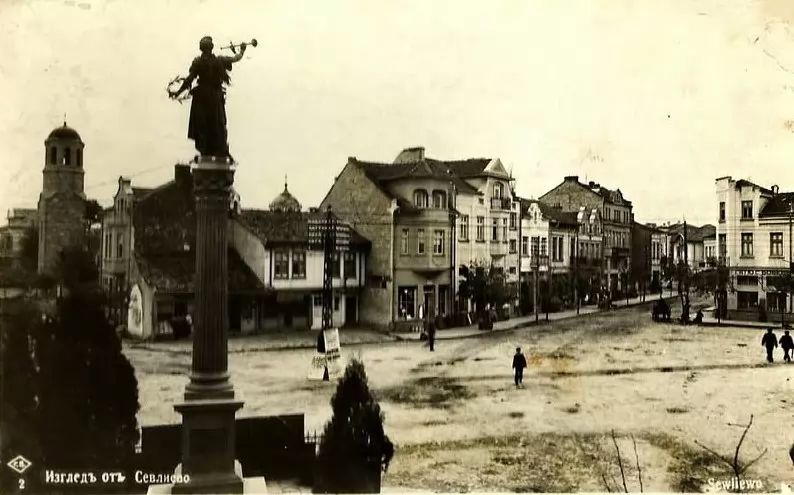
Years later, in 1894, Through the initiative of the supporters of Sevlievo, organized in the volunteer society "Lion", and with the help of patriotic residents of Sevlievo, a monument with a statue has been erected. The statue depicts a young woman with a trumpet, a laurel wreath in her hands and a gaze towards enslaved Macedonia. The monument was made in honor of the hanged and martyred heroes who died for the freedom of Bulgaria.









 Mobile verison
 RSS
RSS
